

How to Travel to Japan on a Budget (Affordable Japan Guide)

Traveling to Japan on a budget is possible, and from my recent trip, the short answer is yes—it is really not expensive anymore, which surprised many people who had heard this country was the most costly place to visit, as I had ever been to several countries along with New Zealand, where a bed in a hostel often costs around USD 50 per night and is not nearly as nice,
yet in Japan it is easily more affordable, so a budget-conscious traveler should not feel discouraged because with advance planning, it becomes a smart destination where you can take time to decide the best options that suit your budget, choose from a wide variety of accommodation, use transportation passes, enjoy sightseeing with discounts available, and browse a helpful list of details to make the experience cost-friendly without feeling limited.
Japan Travelers
Over the years, the tourism sector in Japan has become increasingly accommodating to solo and independent travelers, and this approach led to a substantial increase in the number of alternative accommodation facilities better suited to meet the needs of solo/independent travelers, which I noticed firsthand and pretty much agreed with after I visited Japan, because it was indeed one of the most expensive countries I had ever visited, however now, 13 years later, many things have changed and eventually led to becoming a much more affordable travel destination for solo travelers, maybe not at the level of those wonderful places, but definitely more affordable than Western destinations.
This shift was also accompanied by innovative and affordable transportation packages, primarily designed to introduce visitors to rural parts of Japan that first-time visitors might otherwise overlook, and then, of course, the Japanese economy and the Japanese Yen losing value, while not ideal for those living in Japan, certainly contributed to the country’s affordability as a travel destination, something I saw clearly while moving between cities and countryside alike.

Benefit from the Hostel Movement Beyond Cities
Price is where most travelers start, and while a hostel bed is still higher than in many other Asian countries, the quality makes up the price difference in Japan, including Tokyo, where a stay often costs in the range of USD 20 30, and I have never had a bad experience in a Japanese hostel, because in line with the country’s overall hygiene standards, the rooms and common spaces are immaculately maintained, with real attention paid to design, something I previously wrote about after staying in several places myself.
This comfort did not appear overnight, as the capsule hotel concept, where guests sleep in a bed inside a capsule instead of a full hotel room, has been lowering cost for a long time, but over the last decade the country joined the design hostel trend, which turns the hostel experience into much more than a mere money-saving option, and into something truly desirable, even though it is not new to Japan.
What changed most is location, because hostels were already abundant in urban destinations like Tokyo, Osaka, and Kyoto, but thanks to a movement where young Japanese people leave big cities and move to rural Japan, there has been a substantial increase in the number opened in areas once ignored, and two years ago I interviewed people who chose to invest in their hometowns with the hope of reviving independent tourism in often-overlooked regions, where renovated traditional homes became great places to mingle with locals, such as Ichi Hostel in Hiwasa, Shikoku, and Kochi no Ya Hostel in Aki, Shikoku, which offer bar/pub nights that cater not only to guests.
Look Beyond Global Booking Platforms
In many cases, I could get a lower rate on Rakuten Travel, or find a room when there was no availability shown on other international booking sites, which is why I now recommend checking the Japanese website and not just the international site, because comparing rates displayed there with those quoted on international booking sites, such as Booking.com, can make a real difference when booking Japan on a budget.
I admit, guilty as charged, I often use booking.com for my accommodation needs, mainly due to the convenience of keeping all bookings in chronological order in one app, plus Booking.com’s user-friendly interface, especially for date changes and cancellations; however, the local site is not easy to navigate, a common feature of many Japanese websites, and you need to use Google Translate, but the outcome may still be worth the effort for budget travelers.
Eat Smart with Local Supermarkets
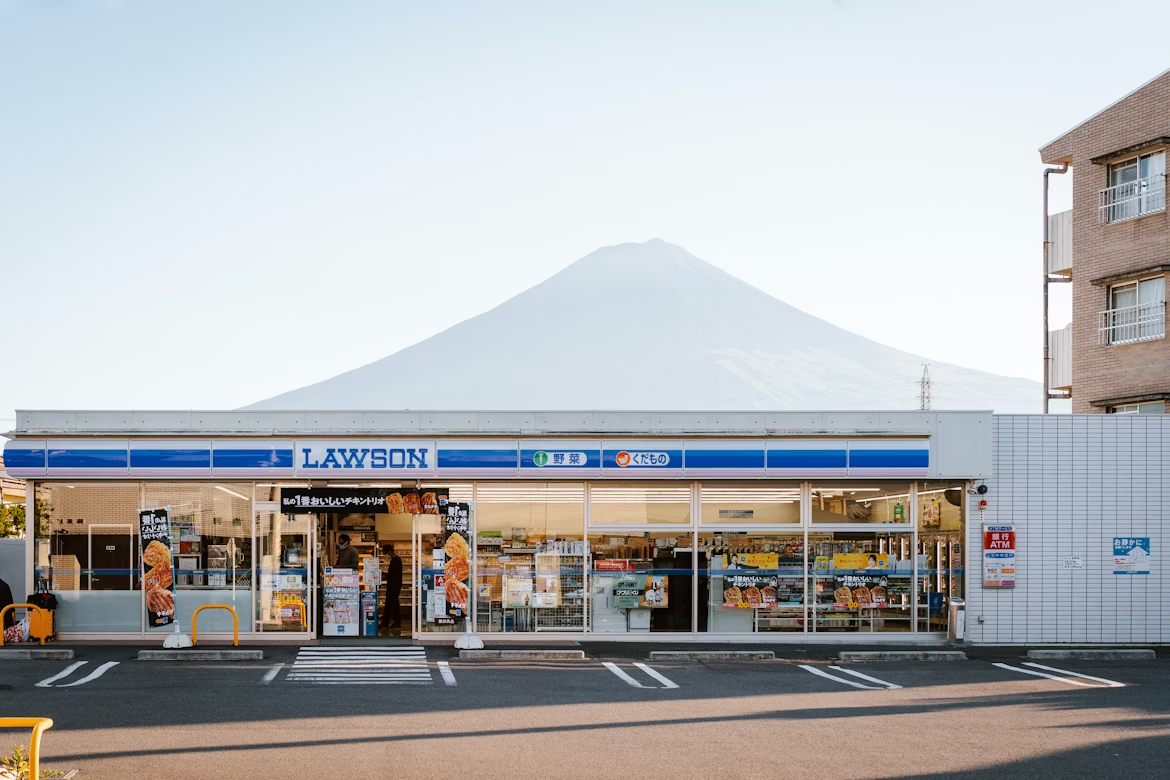
Supermarkets are a better option when you are looking to take a break from eating at a restaurant, even though they are wonderful and often reasonably priced, because in Japan, famous convenience stores, as the name suggests, are very handy for visiting and living, selling everything from underwear to pre-cooked food, and are an integral part of daily life, however supermarkets give you more value and choice.
Most mid to large-size supermarkets have their own kitchens where daily sets of lunch and dinner are cooked, and you can pick a large box of delicious sushi at prices low like USD 3-4, or enjoy salmon and a wide range of freshly cooked selection, which is why LIFE and Livre Keisei are my favorite supermarket brands and a real lifesaver when traveling and needing a cheaper and faster meal option.
Regional Train Passes Instead of One Nationwide Ticket
If you are interested in a trip to Japan anytime soon, you may have already heard about the massive price increase of the Japan Rail Pass, which covers all JR lines across the country, including the Shinkansen, implemented a few years ago, because the 7-day pass that used to cost 29,640 Japanese Yen (approx. USD 224) now, as of October 2023, sells for 50,000 Japanese Yen (approx. USD 374), and this change affects how travelers plan rail travel.
Prior to the dramatic price increase, the cost of the 7-day pass was equal to a round-trip Shinkansen ticket between Tokyo and Kyoto, resulting in many visitors investing in the pass without giving much thought to their overall itinerary; however, with new prices, travelers need to study their itinerary carefully and decide whether it is worth buying the Japan Rail Pass, which may not be the ideal option when focusing on the Golden Route Japan (Tokyo, Hakone, Kyoto, Hiroshima), because the drastic increase in cost for a pass that covers the nationwide JR rail network has made regional train passes also available and become a more popular choice, and even during my first trip to Japan in 2012, I opted opposed to the national pass, which provided a better deal for my Kansai-focused itinerary.
There are multiple regional rail passes that we can cover like JR rail or other rail line companies, but among the popular regional passes few of them are given below :- (full list here)
JR East Tohoku Rail Pass: Flexible Days, Big Value
An excellent destination in any season, Japan is particularly beautiful in autumn during the fall foliage season, and every year I benefit from this pass as well as some extra trips, since the region is home to the most historical and fascinating hot spring stays in Japan, making Tohoku a rewarding choice for slow, budget-friendly travel.
The pass is available to visitors and residents of Japan holding a foreign passport, and it costs approximately 30,000 Japanese Yen (USD 200) for unlimited use over five consecutive days; due to high demand, they recently introduced a ten-day version for 50,000 Japanese Yen, which is a terrific deal that I personally used twice, and while you need to change to buses for certain remote destinations, it still proved a great deal, especially when considering the cost of a one-way Shinkansen ticket from Tokyo to Aomori, the northernmost city in Tohoku, at 17,900 (approx. USD 120).

Exploring Japan’s Remote Regions with a Rail Pass
By covering the entire JR rail network across Japan’s second largest yet least populated island, Hokkaido, this pass costs 20,000 Japanese Yen (approx. USD 150) for 5 days, 26,000 Japanese Yen (approx. USD 190) for 7 days, and a recently introduced 10-day pass option that costs 32,000 Japanese Yen, and while it is available only to visitors and not foreign residents, I found it substantially reduces transportation costs when slow traveling, because this destination is full of vibrant cities and, importantly, astonishing landscape scenery, including Japan’s largest national park, making long rail days feel like part of the experience rather than an expense.
Fly Smart with Discounted Visitor Fares
I dread the idea of taking a plane in a country so well served by an amazing train network, but air travel is sometimes the only option, especially when you are short on time or intend to visit remote destinations, and while this is not widely known to foreign visitors, major Airlines such as ANA offer reduced fares to visitors holding an international returnticket to Japan, which I benefited from many times before my move, allowing me to visit locations that are either not served by train or require multiple days, since a one-wayfare to most locations costs around USD70, and all you need is to show proof of a temporary visitor stamp in your passport plus a return ticket to a destination outside Japan, and your airline does not have to be ANA or a Star Alliance flight.
Japan Budget Travel : Final Tip
If you are notshort on time, there are countlessdestinations in Japan, and gettingoff the mainland to visitsmallerislands is a wonderfuloption to experienceextremelyrurallifecenteredaround the ocean, while travelers who likehiking are in luck because mountainscover70% of Japan`sland and hostthousands of trailsfit for bothbeginner and advancedhikers, and if you are looking at combininghiking with culture and history, you can explore routes that blend nature with tradition, something I often do to save money while seeing deeper sides of the country.
